Mastering the Art of a Balanced Meal
Building a Balanced Plate
Eating a well-balanced meal is essential for maintaining good health and energy levels. But, what does a balanced plate really look like? It might seem complicated, but by following a few simple guidelines, anyone can create nutritious meals that are both delicious and satisfying.
Key Components of a Balanced Plate
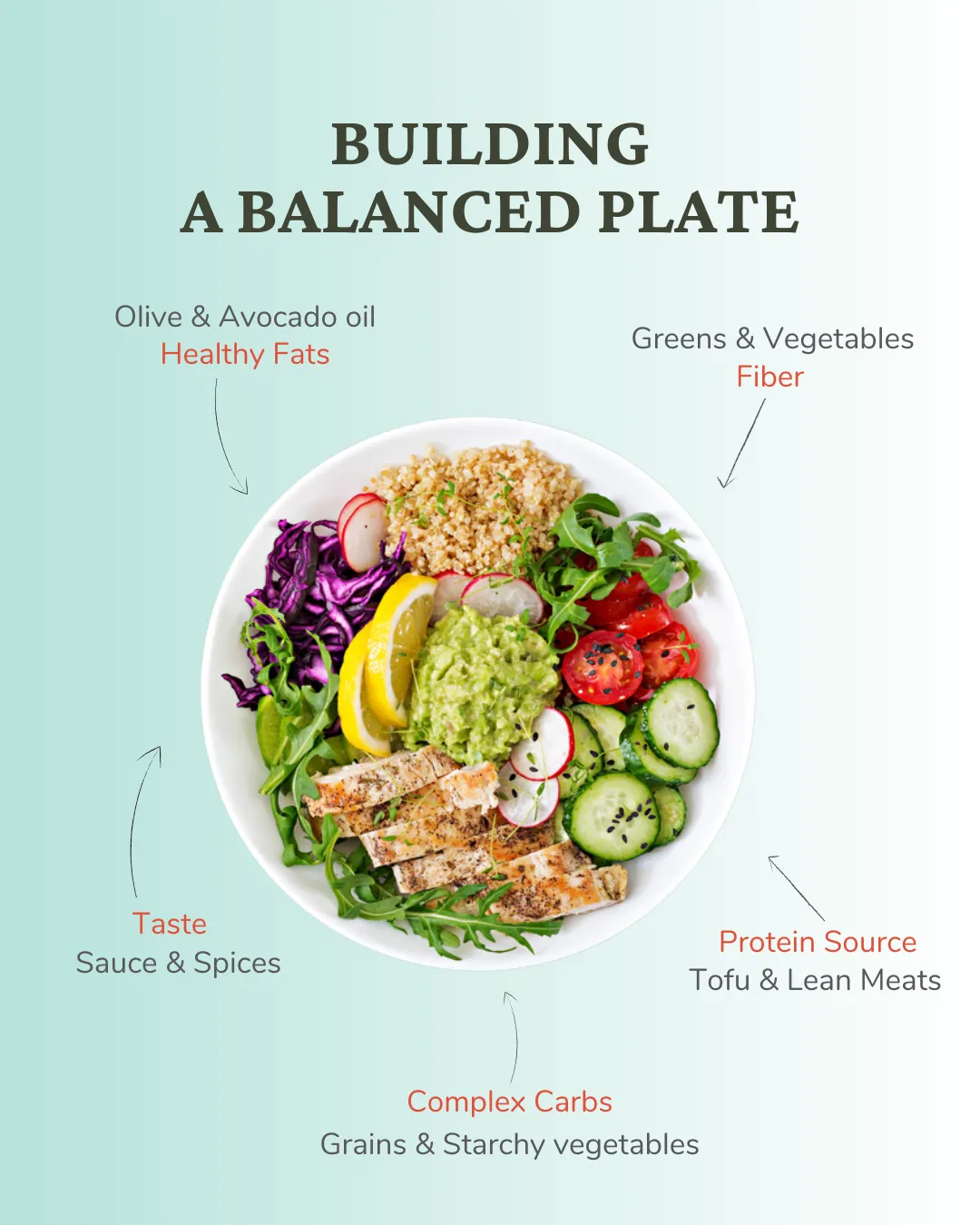
To build a balanced plate, include the following key components:
- Healthy Fats: Use olive oil or avocado oil to add flavor and essential fatty acids to your meals. These oils help your body absorb vitamins and minerals more effectively.
- Fiber: Incorporate a variety of greens and vegetables like spinach, kale, broccoli, and bell peppers. They are rich in fiber, which aids digestion and keeps you full longer.
- Protein: Add a source of protein such as tofu, chicken, or fish. Proteins are the building blocks of the body, essential for muscle growth and repair.
- Complex Carbs: Include grains or starchy vegetables like quinoa, brown rice, or sweet potatoes. Complex carbs provide steady energy throughout the day.
- Taste: Enhance your meal with sauces and spices like lemon juice, garlic, cumin, or turmeric. These not only add flavor but also offer health benefits.
Steps to Create Your Balanced Plate
- Start with Vegetables: Fill half of your plate with a variety of colorful vegetables.
- Add Protein: Choose lean protein like grilled chicken or plant-based options like tofu.
- Include Whole Grains: A quarter of your plate should be whole grains or starchy vegetables.
- Add Healthy Fats: Drizzle some olive oil over your vegetables, or include a side of guacamole.
- Season to Taste: Use spices and herbs to enhance the flavors, making your meal enjoyable and flavorful.
Benefits of a Balanced Plate
Eating a balanced plate consistently can lead to numerous health benefits, including:
- Improved Digestion: Fiber-rich vegetables help keep your digestive system running smoothly.
- Sustained Energy: Complex carbohydrates provide a steady energy supply.
- Better Muscle Health: Proteins are vital for muscle growth and maintenance.
- Heart Health: Healthy fats like those found in olive oil support heart health.
- Weight Management: A balanced diet can help maintain a healthy weight.
Practical Tips for Busy Lives
Balancing your meals doesn’t need to be time-consuming or challenging. Here are some practical tips:
- Plan Ahead: Prepare ingredients in advance to save time during meal prep.
- Batch Cook: Cook larger portions to have leftovers for upcoming meals.
- Use Simple Recipes: Opt for uncomplicated dishes that require fewer steps and ingredients.
- Keep Staples on Hand: Maintain a stock of essential ingredients like grains, frozen vegetables, and proteins.
- Be Flexible: Use what you have available, and don’t stress over following the plan perfectly.
Conclusion
Creating a balanced plate is a fundamental step towards improving your health. By focusing on variety and including all the essential nutrients in your meals, you can enjoy tasty, satisfying, and nutritious food every day. Remember, the key is not to restrict but to balance. Enjoy your meals and nourish your body with what it truly needs.
